
Applications
LA1 Aisle Lighter
Does your store look dull even though you exceed the required floor light levels ? The cause is dark walls, dark shelving and a dark ceiling.That is the cave effect. The problem got worse after the introduction of LED lighting.
Legacy HID and fluorescent high bays were non-directional. Got the floor brightness right and the walls and ceiling lit up as a side effect.So the engineering requirement mostly specified floor brightness only (foot candles).
Then LED arrived. LEDs are directional. You can beat the floor foot candles and still put almost nothing on the walls or the ceiling. This isnot an issue for a distribution warehouse but a major issue for retail warehousing. Dark walls and ceiling will make the space appear dull,dark and unappealing to your customers.
This is the problem we solve with the RH1-RFL high bay. We developed three optics specifically to light a retail warehouse in a way that appeals to your customers, while reducing glare and increasing visual comfort. Better still, a well-lit store increases sales.
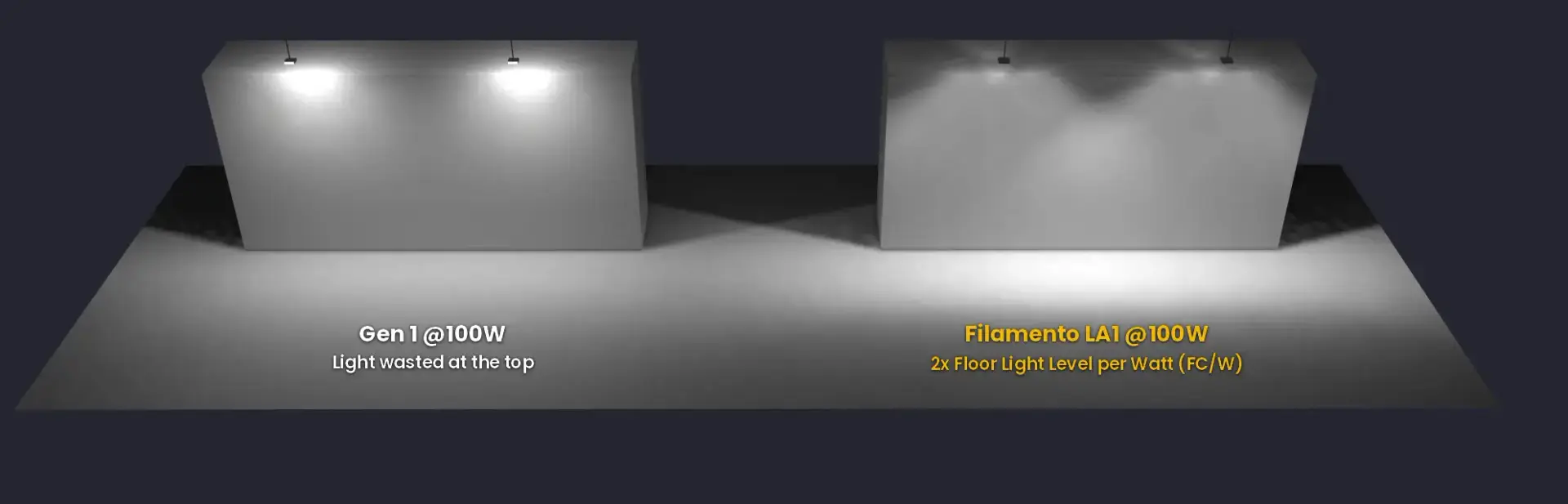
Both fixtures draw 100W. Gen 1 throws its light at the rack top. Gen 2 puts it down the rack face and onto the floor.
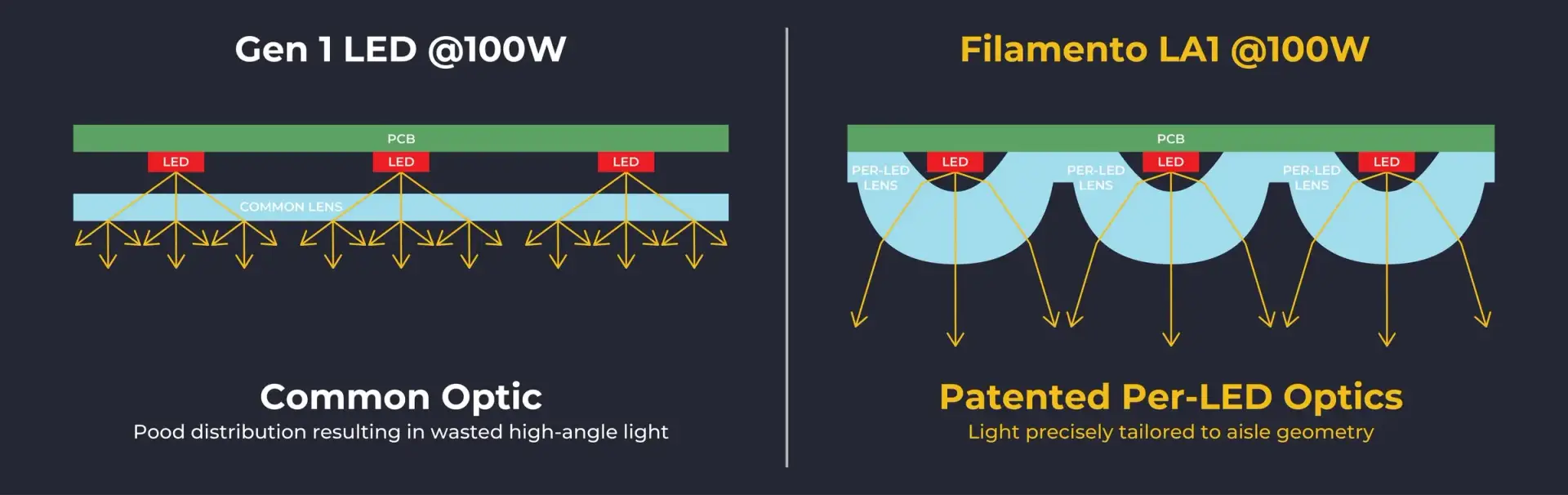
Gen 1 runs one common lens over every LED. Filamento puts a lens on each LED, aimed at the part of the aisle it has to light.
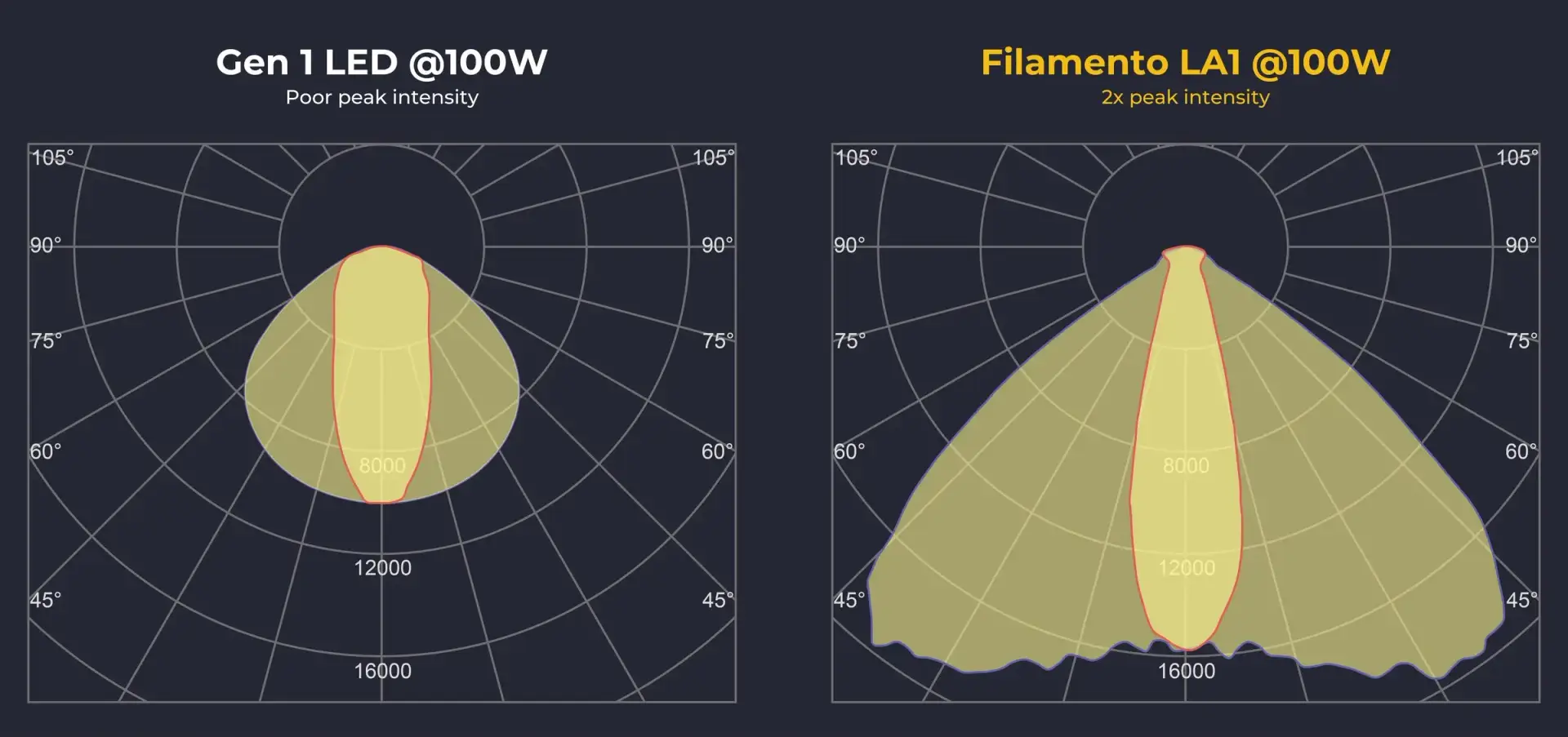
Same 100W into both. Gen 2 reaches 2x the peak candela and holds it out along the aisle.
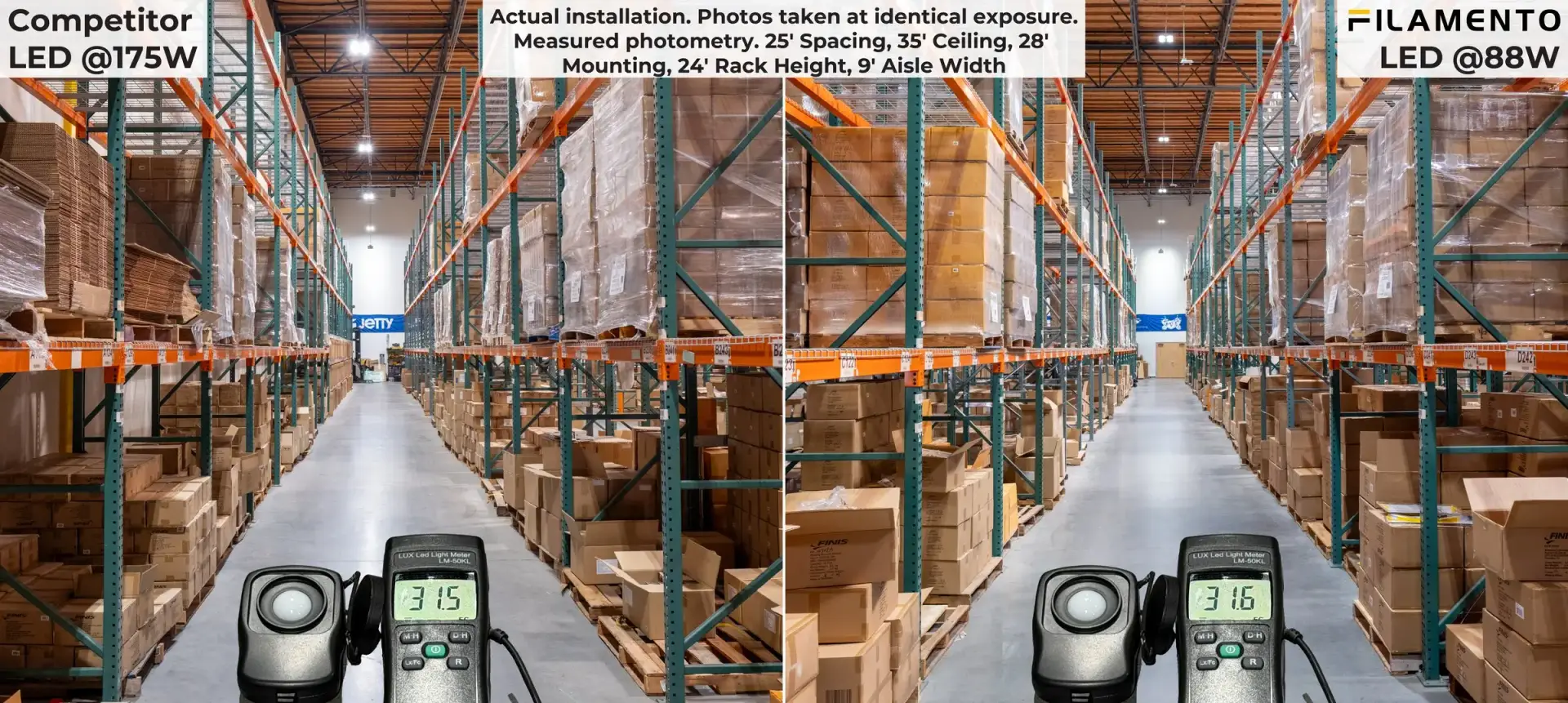
Same aisle, same spacing, same camera exposure. The competitor at 175W measured 31.5 FC. The LA1 at 88W measured 31.6 FC.
1
US Department of Energy, Adoption of Light-Emitting Diodes in Common Lighting Applications, August 2020, Section 3.7 Low/High Bay. 18.0 million LED low/high bay installations in place as of 2018 (text, PDF page 39); about 9.1 million in 2016 (Figure 3.11, PDF page 40); so roughly 9 million were added over those two years. DOE does not separate high bay from low bay; Filamento assumes half are high bay, about 4.5 million.